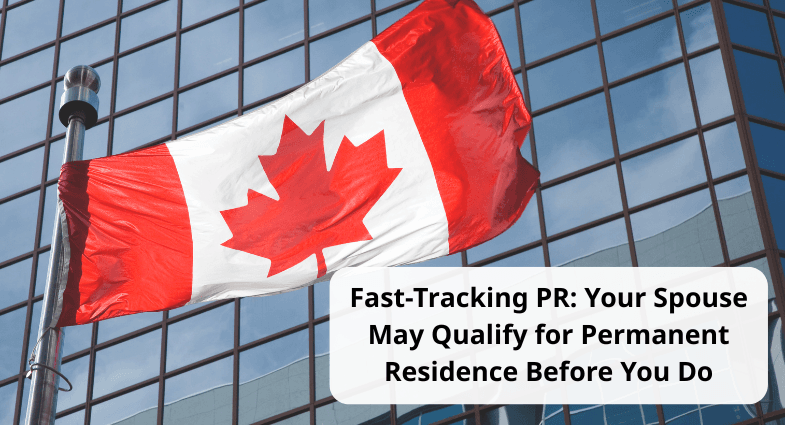
For many international students, the journey to Canadian permanent residence (PR) is a long-term goal. However, recent insights suggest that the key to a faster PR path might not lie with the student, but with their spouse.
Under current Canadian immigration regulations, when an international student enrolls in a qualifying program—such as a Master’s or Doctoral degree—their spouse may be eligible for a Spousal Open Work Permit (SOWP). This permit allows the spouse to work full-time for any employer in Canada while the student completes their studies.
1. The "Spousal Advantage" in Express Entry
The strategic advantage lies in how the Comprehensive Ranking System (CRS) awards points. While a student is busy attending lectures and completing assignments, their spouse can be active in the Canadian labor market, gaining valuable "Canadian Work Experience."
By the time the student graduates, the spouse may have already accumulated 1 to 3 years of full-time work experience. In many cases, this makes the spouse a much more competitive "Principal Applicant" for Express Entry draws, particularly under the Canadian Experience Class (CEC).
2. A Comparative Look
According to data analyzed by CIC News, a spouse working in a skilled occupation often reaches the required CRS cutoff scores sooner than the student. For instance:
- The Spouse: Can earn significant points for Canadian work experience and language proficiency while the student is still in school.
- The Student: Usually has to wait until graduation to receive a Post-Graduation Work Permit (PGWP) before they can even begin accruing the work experience needed for PR eligibility.
In a hypothetical scenario involving a two-year Master’s program, a spouse could potentially receive an Invitation to Apply (ITA) for PR before the student has even finished their degree.
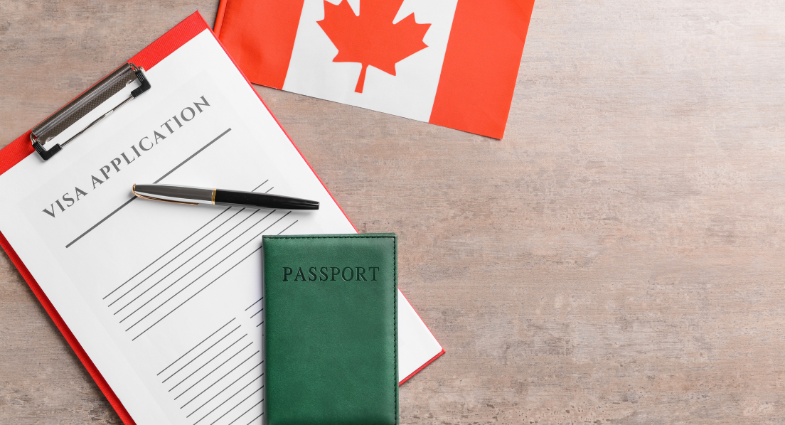
3. Qualifying Programs for Spousal Permits
To leverage this pathway, the international student must be enrolled in specific eligible programs, including:
- Master’s or Doctoral degree programs.
- Professional programs such as Law (JD/LLB), Medicine (MD), Pharmacy (PharmD), or Engineering (BEng).
- Certain nursing and education credentials.
4. Strategic Planning for Families
This "dual-track" approach highlights the importance of strategic planning for families moving to Canada. By identifying who has the stronger profile for PR early on, couples can maximize their chances of staying in Canada permanently.
For international students, this means their education is not just a personal achievement, but a foundational step that opens immediate doors for their family’s future in Canada.
5. List of Canada Institute offered Master programs
- Laurentian University
- University of Windsor
- Brock University
- Fairleigh Dickinson University
- Thompson Rivers University
- University of Saskatchewan
Source: CIC News.